Palliative Care Turmor Zentrum Aargau

Part of tumor therapy

Specialized palliative medicine

Palliative care is a medical discipline for the treatment of people with incurable, life-threatening, or chronically progressive diseases. Its goal is to alleviate suffering, prevent complications, and enable a quality of life adapted to the individual situation.

It is not only used at the end of life, but can be implemented early on alongside tumor-directed therapies. Palliative care complements oncological treatment and is an integral part of comprehensive care.

Holistic care

Palliative care for advanced disease

Palliative care accompanies people with advanced, incurable, or chronically progressive diseases. It is oriented toward the individual needs of patients and their relatives and can be accessed on both an outpatient and inpatient basis.

Focus of palliative care

Palliative medicine encompasses medical, nursing, psychological, social, and spiritual aspects of care. The goal is to alleviate symptoms, prevent complications, and maintain quality of life.

Key areas include:

  • Treatment of complex symptoms such as pain, shortness of breath, nausea, vomiting, fatigue, or loss of appetite

  • Prevention of complications

  • Support with difficult treatment decisions

  • Involvement of close relatives and caregivers

Who palliative care is for

Palliative care is specifically aimed at patients with:

  • Advanced oncological diseases

  • Chronically progressive non-oncological diseases

  • Complex symptom burden

  • Increased need for support during the course of the illness

Traditionally, people with advanced cancer represent the largest group. In accordance with the broader understanding of palliative care, however, these services are also open to patients from cardiology, pulmonology, neurology, and surgical departments.

Palliative care – two perspectives

Both therapy and support services

Palliative care includes the medical treatment of complex symptoms as well as counseling and psychosocial support.

Both aspects are intertwined and complement the oncological treatment.

From A to Z

Process of assessment and treatment

  • Palliative medicine consultation
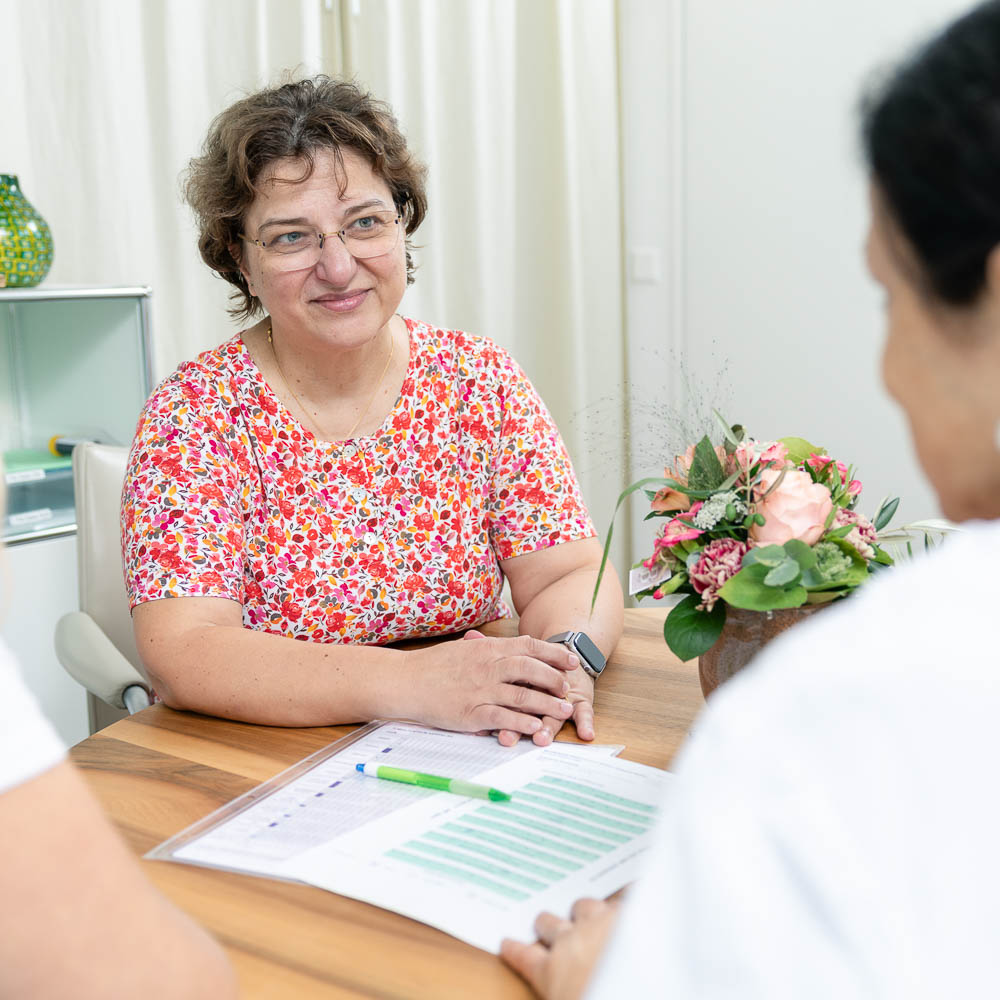
    Following registration, a specialized outpatient consultation takes place. During this, current symptoms, burdens, and the individual situation are comprehensively assessed.

  • Symptom and needs analysis
    Together, physical symptoms such as pain, shortness of breath, nausea, or fatigue are assessed, and psychological, social, and spiritual aspects are taken into account.

  • Treatment planning
    Treatment goals are defined, and medical and supportive measures are coordinated. Palliative care is provided if needed alongside oncological or other disease-specific therapy.

  • Multiprofessional collaboration
    Care is provided in close cooperation with nursing specialists, psychologists, social services, pastoral care, nutritional counseling, and other specialist disciplines.

  • Inpatient co-treatment
    During an inpatient stay at Hirslanden Klinik Aarau, the palliative care team remains involved in the treatment. The goal is continuous and coordinated care.

  • Outpatient-inpatient networking
    Palliative medicine is part of a broad network including Spitex, specialized outpatient services, and other partners to ensure seamless care.