
Interdisciplinary collaboration
Coordinated Cancer Therapy from a Single Source
The diagnosis, treatment, and follow-up care of cancer have become significantly more complex in recent years. Diagnostics, surgical procedures, drug therapies, radiotherapy, and supportive measures are interconnected.
High-quality cancer treatment can therefore no longer be provided by a single specialist alone. It requires coordinated collaboration between different disciplines with clearly defined responsibilities.
At the Tumor Zentrum Aargau, specialists from different fields work closely together to define and implement professionally coordinated and contemporary therapy for each patient.
Specialist Network and Tumor Boards
How does the close collaboration work?
Integrated Specialist Network
For diagnostics and surgical procedures, there is close cooperation with proven specialists at the Hirslanden Klinik Aarau and its institutes.
The network includes over 100 specialists from medical and surgical disciplines. This allows even complex issues to be clarified promptly and therapies to be carried out in a coordinated manner.
The close integration of:
ensures therapy planning that is supported by all participating disciplines.
Tumor boards — structured decision-making
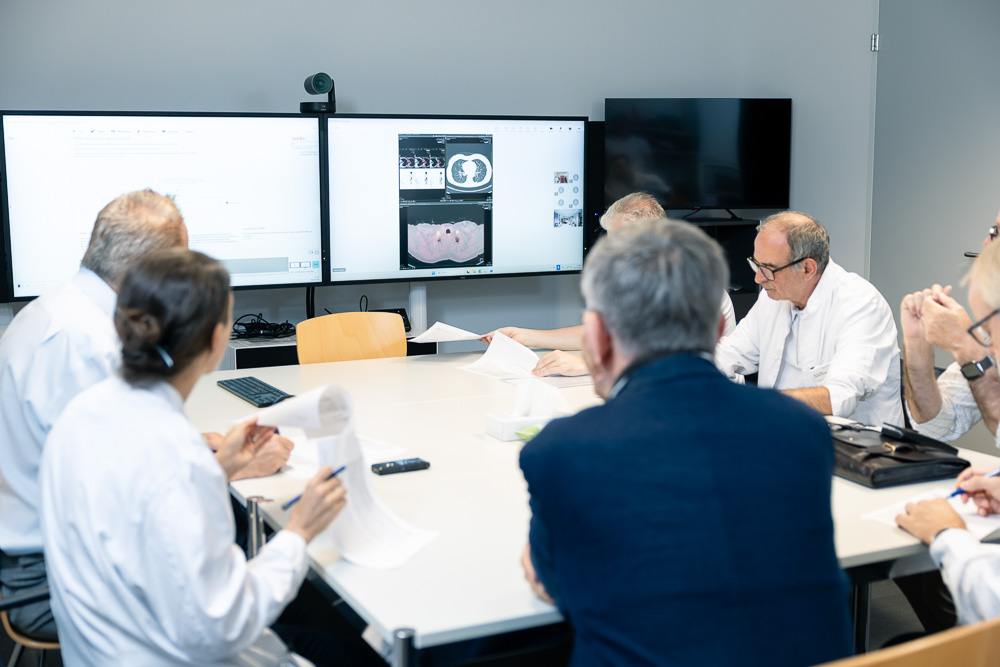
A key element of interdisciplinary collaboration is regular tumor boards.
Specialists who focus on the treatment of malignant tumors discuss individual cases together. The aim is to assess diagnostic findings, weigh up treatment options, and define a coordinated approach.
Tumor boards are held weekly in the following areas:
In addition, complex disease courses and palliative situations within the Tumor Center are regularly discussed on an interdisciplinary basis.
Our tumor boards are also open to referring physicians outside the center.
Short distances at the Tumor Center Aargau
The close proximity of the involved specialties enables spontaneous coordination.
When medically appropriate, patients can be assessed in the same consultation together with additional specialists. This allows, for example, oncological, radiotherapy-related, or palliative questions to be coordinated directly.
Continuity of care
Therapy decisions remain coordinated
Even during an inpatient stay, the attending physician remains involved in the patient’s care. This ensures the continuity of medical care and ensures that therapy decisions remain coordinated.
Furthermore, collaboration with family physicians and external hospital services is an essential part of the care concept. It helps to ensure that diagnostics, therapy, and follow-up care are seamlessly integrated.